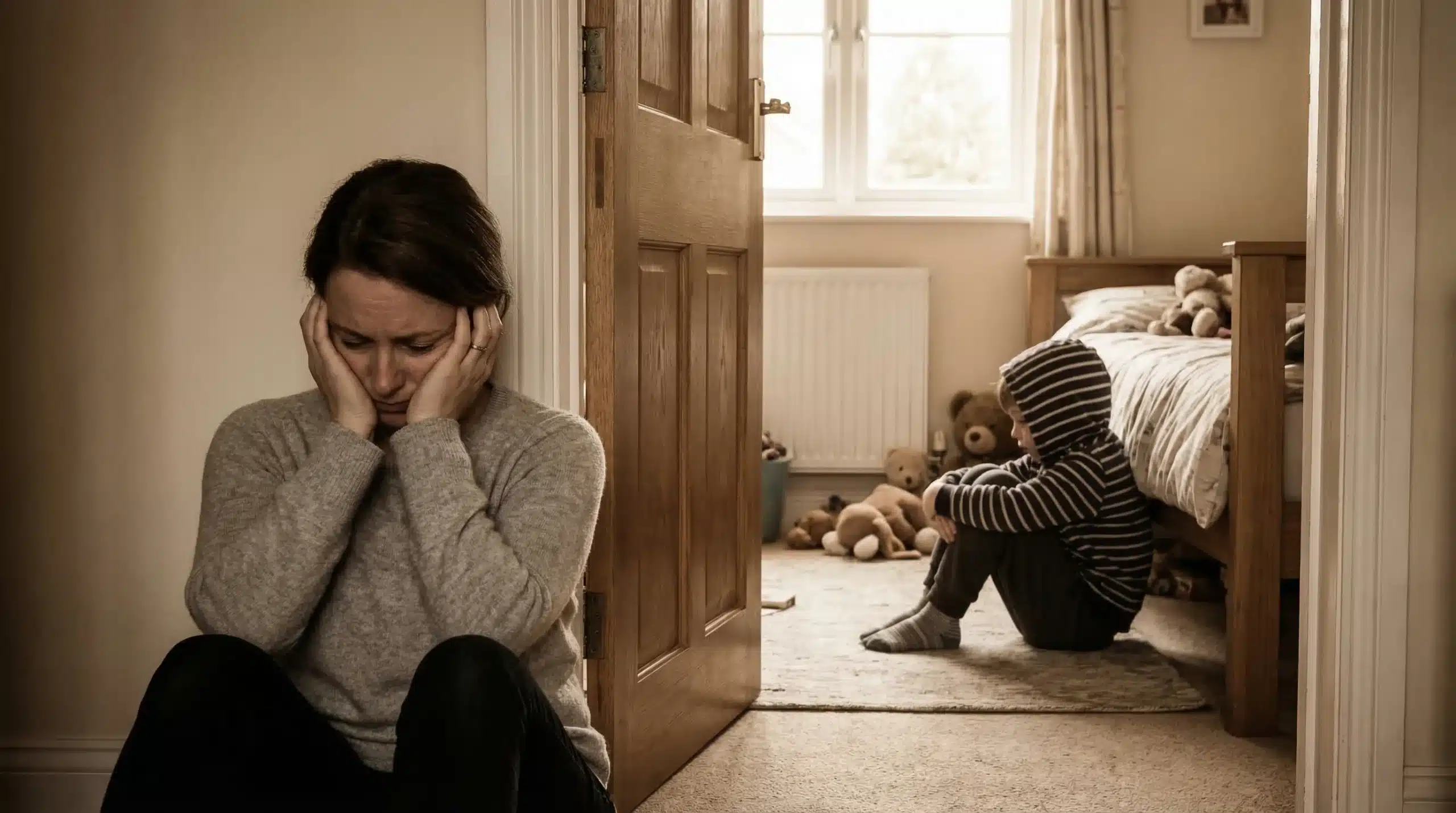
When a child is overwhelmed, parents often see one thing on the outside — yelling, crying, shutting down, refusing, or exploding over something small. But underneath that behavior, there is usually something much deeper happening. In many cases, what looks like anger is actually anxiety in disguise.
That is why learning how to calm an anxious or angry child is not just about stopping the behavior in the moment. It is about understanding what the child’s nervous system is doing, responding in a way that reduces fear, and using simple tools that help them feel safe again. The good news is that you do not need to be a therapist to make a real difference. With the right strategies, parents can help children regulate big emotions, reduce emotional outbursts, and build healthier coping skills over time.
In this article, you will learn 3 practical, evidence-based ways to calm an anxious or angry child, why those strategies work, and what to say during hard moments so you do not accidentally make the situation worse.
Why Anxiety and Anger Often Show Up Together
Many parents assume anxiety always looks like fear, clinginess, worry, or tears. Sometimes it does. But in children, anxiety can also show up as irritability, defiance, avoidance, stomachaches, perfectionism, sleep problems, or sudden anger. A child whose brain feels threatened may move into fight, flight, or freeze mode. Some children cry. Others run away. Others become angry.
This is why anxiety and anger in children are so often connected. The child is not necessarily trying to be difficult. Their body may be reacting as if danger is present, even when the real trigger is a school demand, a social problem, a change in routine, sensory overload, or fear of failure. When the nervous system is activated, logic comes offline. That means lectures, punishments, or demands to “calm down” usually do not help.
If you want to calm an angry child or help an anxious child regulate, the first goal is not control. The first goal is safety.

1. Regulate the Nervous System First
The first and most important step is to calm the child’s body before trying to reason with their mind. An anxious or angry child cannot absorb problem-solving, correction, or reassurance when their nervous system is in survival mode. This is why body-based calming strategies work so well. They help the child move out of high alert and back into a more regulated state.
One of the most effective ways to do this is through simple physical regulation tools. These do not need to be complicated. Slow breathing, sensory grounding, cold water on the face, or a short pause in a quiet environment can all help reduce the intensity of the moment.
Try these calming techniques for kids:
- Slow exhale breathing: Ask the child to pretend they are blowing out a candle slowly.
- 5-4-3-2-1 grounding: Help them name 5 things they see, 4 they feel, 3 they hear, 2 they smell, and 1 they taste.
- Cold water reset: Splash cold water on the face or use a cool washcloth.
- Wall push or heavy work: Let them push against a wall, squeeze a pillow, or carry something soft but heavy.
- Safe corner reset: Sit nearby in a calm, quiet space without pressuring them to talk.
These calming strategies are useful because they support emotional regulation for kids by working with the body instead of fighting against it. A child in a meltdown is not choosing logic over emotion. Their body is already choosing for them.
What to say:
- “Your body is having a hard time right now. I’m here with you.”
- “Let’s help your body feel safe first.”
- “You don’t need to talk yet. Let’s just breathe together.”
- “I’m staying close. We can slow this down.”
What to avoid:
- “Calm down.”
- “Stop yelling.”
- “You’re overreacting.”
- “If you don’t stop, you’ll lose your tablet.”
When parents start with nervous system regulation, they reduce the chance of escalation and create the conditions needed for real calming to happen.
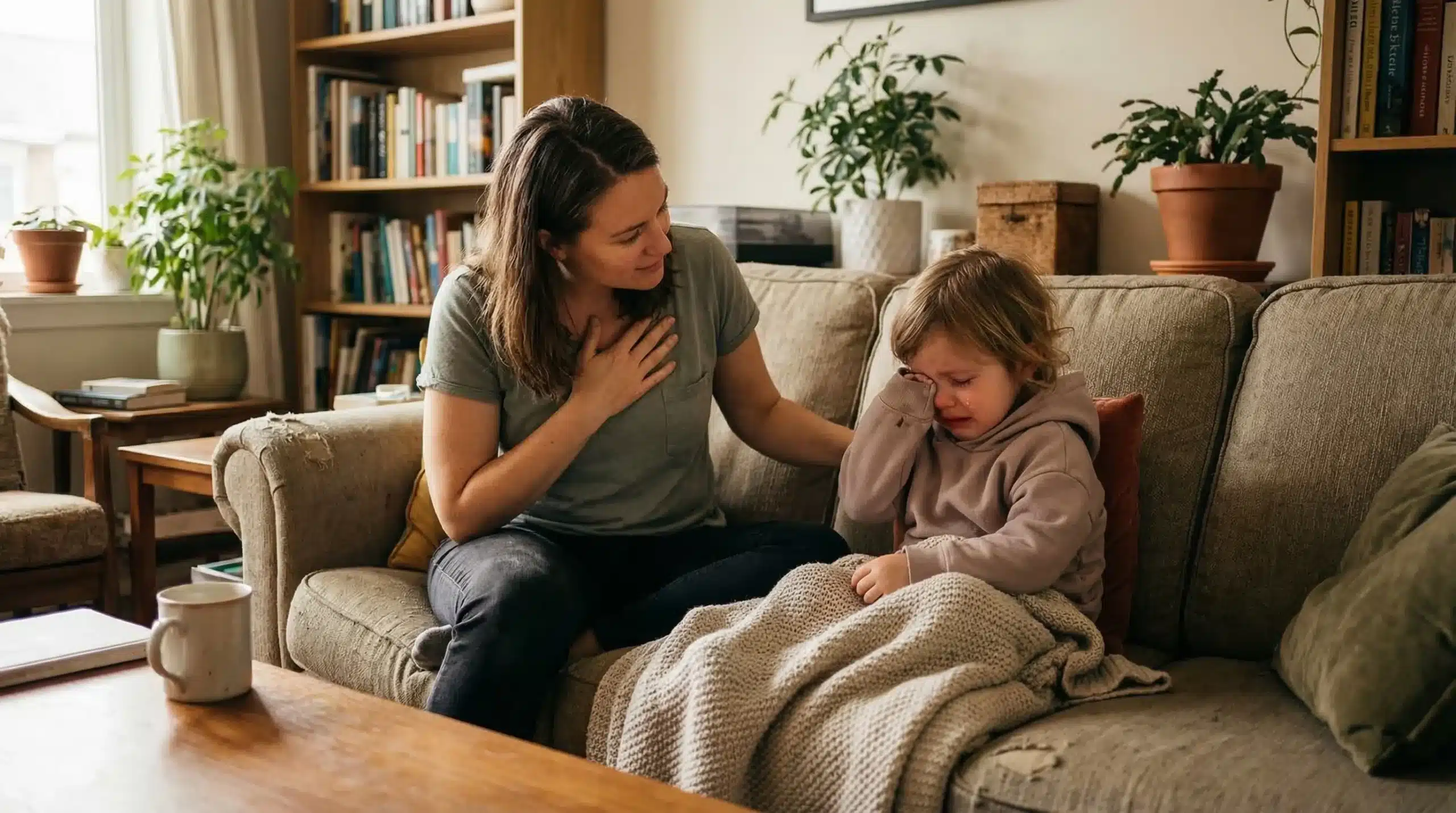
2. Validate the Feeling Before You Correct the Behavior
One of the biggest mistakes adults make is trying to fix the behavior before they acknowledge the emotion underneath it. But when a child feels misunderstood, their distress often gets louder. Validation does not mean agreeing with bad behavior. It means showing the child that you understand the feeling driving it.
This is one of the most effective CBT-inspired and emotionally attuned parenting tools because it lowers defensiveness. When a child hears, “You’re okay, this is nothing,” they feel alone. When they hear, “That felt really big to you,” their brain gets the message that someone understands.
If you are trying to calm an anxious child, validation reduces shame. If you are trying to calm an angry child, validation often lowers intensity because the child no longer has to “prove” how upset they are.
Examples of validating phrases:
- “That felt really frustrating.”
- “I can see this hit you hard.”
- “You were not ready for that change.”
- “It makes sense that your body got overwhelmed.”
- “I believe that this feels big right now.”
After validation, you can set limits if needed:
- “I won’t let you hit.”
- “You can be mad, but I won’t let you hurt anyone.”
- “It’s okay to feel angry. It’s not okay to throw things.”
- “I’m going to help you get safe.”
This combination is powerful because it teaches two things at once:
- feelings are real and safe to have
- behavior still has boundaries
That is a key part of helping children build healthy coping skills instead of fearing their own emotions.
A simple formula parents can use:
Name the feeling + show understanding + hold the limit
Example:
- “You’re really upset because your game ended, and that feels unfair. I get it. I’m still not going to let you throw the controller.”
This approach is especially helpful for child anger management because it prevents the power struggle that often makes outbursts worse.

3. Stay Curious About the Trigger Instead of Fighting the Surface Behavior
Once the child is calmer, the next step is to understand what actually triggered the reaction. Many parents focus only on the visible behavior: yelling, refusing, crying, slamming doors, or lashing out. But if the true driver is anxiety, then addressing only the behavior will not solve the problem.
A child may look angry when they are actually:
- worried about school
- embarrassed after a social interaction
- overloaded by noise or stimulation
- afraid of making a mistake
- ashamed of disappointing someone
- struggling with transitions
- exhausted from poor sleep
This is why one of the best ways to help an anxious child is to gently investigate the pattern after the storm has passed. Not during the peak. After.
Helpful questions to ask later:
- “What felt hardest about that moment?”
- “Did something happen before you got upset?”
- “Was your body feeling worried, mad, or both?”
- “Did it feel like too much all at once?”
- “What would help next time when it starts to build?”
These kinds of questions teach emotional awareness. Over time, children start to notice their own warning signs sooner. That is how real self-regulation develops.
You can also look for repeat patterns:
- meltdowns before school
- anger after screen time ends
- tears at bedtime
- stomachaches before social events
- irritability after busy weekends
- shutdowns around homework or perfectionism
Patterns matter. They turn “my child is always angry” into “my child gets overwhelmed during transitions” or “my child becomes dysregulated when they feel embarrassed.” That kind of clarity helps parents respond with much more skill and much less frustration.
Why These 3 Strategies Work Better Than Punishment
Punishment may stop a behavior temporarily, but it rarely teaches regulation. In some cases, it increases fear and makes anxiety worse. If a child is already dysregulated, adding shame, threats, or harsh consequences often intensifies the fight-or-flight response.
The 3 strategies above work because they address the real problem:
- regulate the body
- validate the emotion
- understand the trigger
That sequence supports the child’s nervous system, strengthens trust, and gives the parent better information for next time. It also helps children learn that emotions can be handled safely, rather than suppressed or exploded.
This does not mean parents should ignore aggression, disrespect, or unsafe behavior. Boundaries still matter. But boundaries work best when paired with connection and regulation.
What to Do If Your Child’s Anxiety or Anger Keeps Escalating
Sometimes home strategies help a lot. Sometimes they help only a little. And sometimes the child needs more support than a parent can provide alone. It may be time to seek professional help if your child’s anxiety or anger is:
- interfering with school regularly
- causing frequent meltdowns or panic-like symptoms
- affecting sleep or appetite
- leading to social withdrawal
- causing physical complaints with no clear medical reason
- lasting for weeks without improvement
- involving threats of self-harm or statements about wanting to die
In those situations, a licensed mental health professional who works with children can help identify whether the underlying issue is anxiety, emotional dysregulation, trauma, sensory overload, or something else. Parent support is powerful, but it does not replace therapy when symptoms are persistent or severe.
If there is ever immediate danger, contact emergency services or a crisis resource right away.
Quick Recap: 3 Ways to Calm an Anxious or Angry Child
If you remember nothing else, remember this:
1. Calm the body first
Use breathing, grounding, cold water, sensory tools, or quiet presence.
2. Validate before correcting
Acknowledge the feeling before setting the limit.
3. Get curious after the moment
Look for the real trigger behind the behavior.
These three steps can completely change how parents respond to child anxiety and anger. They lower conflict, build trust, and help kids develop emotional regulation skills that will serve them for years.
Final Thoughts
Big emotions do not always mean bad behavior. Sometimes they mean a child’s nervous system is overwhelmed and asking for help in the only way it knows how. When parents learn how to calm an anxious or angry child with steady, evidence-based support, they stop reacting only to the noise and start responding to the need underneath it.
You do not need perfect words. You do not need perfect timing. And you do not need to solve everything in one moment. What matters most is that your child experiences you as safe, steady, and willing to understand what is really going on.
That is where healing starts.
FAQ: How to Calm an Anxious or Angry Child
What is the fastest way to calm an anxious child?
The fastest approach is usually body-based regulation first. Slow breathing, grounding, a cool washcloth, and a calm adult presence often work better than talking right away.
Why does my anxious child get angry?
Anxiety can activate the fight-or-flight system. Some children respond to fear with anger, irritability, yelling, or defiance instead of tears or worry.
Should I talk during a child’s meltdown?
Keep words minimal during the peak of distress. Focus on safety, calm presence, and simple phrases. Save problem-solving for later.
Is anger always a sign of anxiety?
No, but anger can sometimes be a mask for anxiety, overwhelm, shame, frustration, or sensory overload. Patterns and triggers help clarify the cause.
When should I worry about my child’s anxiety?
If anxiety is affecting school, sleep, friendships, eating, or daily functioning for several weeks, it is a good idea to consult a pediatrician or child therapist.