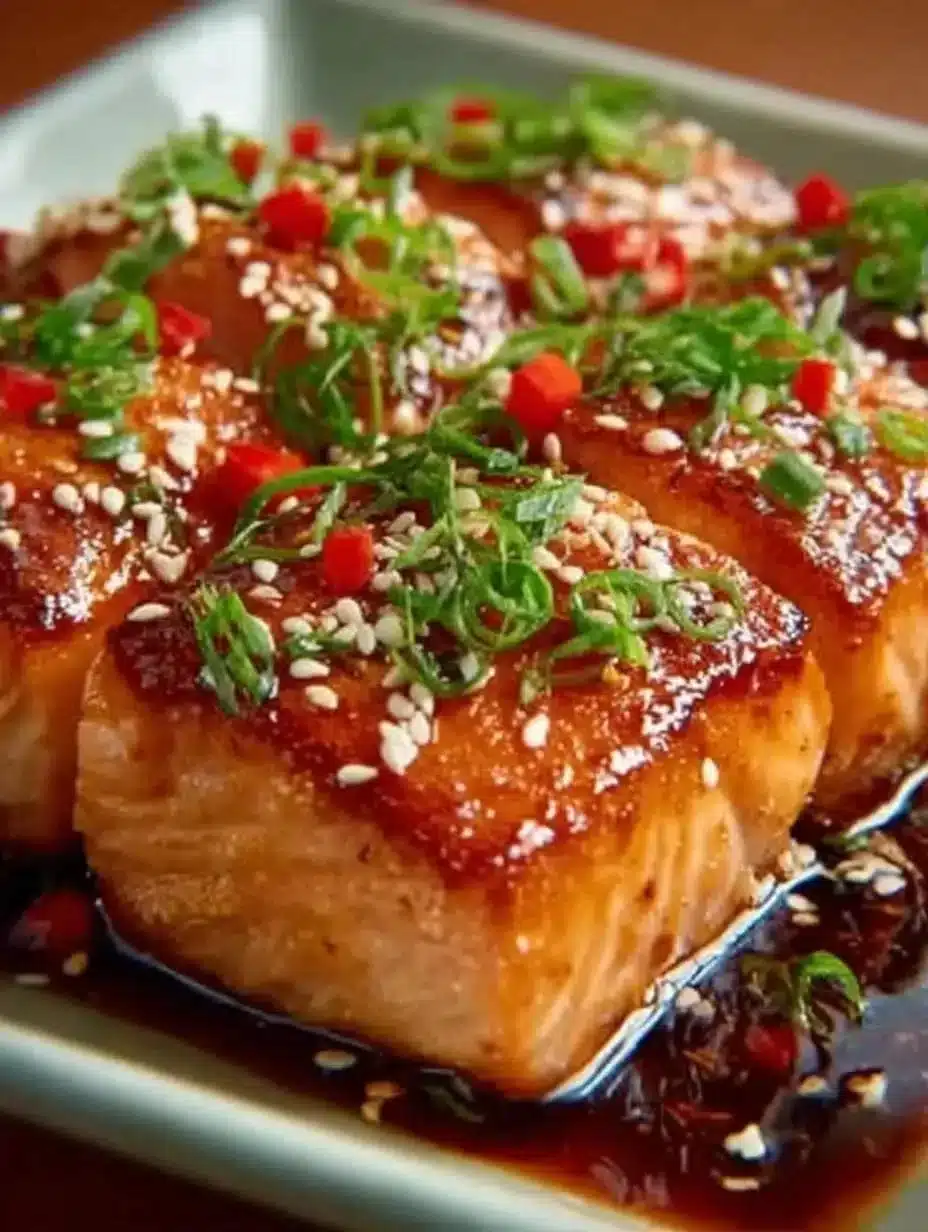
Orange Teriyaki Salmon — Simple Glazed Weeknight Recipe
Bright, sticky, and caramelized—this orange teriyaki salmon sings with citrus and umami. Orange teriyaki salmon balances sweet orange, soy, and a touch of heat so each bite is glossy and tender. I developed this version after testing it eight times for oven and stovetop methods; the results shown here are the easiest and most reliable for home cooks. The glaze reduces quickly to a shiny coating that clings to the fish without burning. If you want a faster weeknight protein with similar flavors, compare techniques with my take on air fryer teriyaki chicken to see how timing changes with different proteins. Read on for a clear ingredient breakdown, exact timings, and pro tips that keep the salmon juicy every time.
Why this recipe works
- A short, hot sear or a quick bake concentrates the glaze without overcooking the salmon, giving a shiny, caramelized finish.
- Acid from fresh orange juice brightens the soy and balances sweetness so the fish never tastes cloying.
- A small amount of cornstarch in the glaze thickens it fast, so you get clingy sauce in under 5 minutes.
- Mirrored techniques for stovetop and oven mean you can use whichever method fits your kitchen and timing.
- Salt and resting times are tuned so the fillets stay moist with a flakey texture every time.
Ingredients breakdown
- Salmon fillets (4 × 170–200 g / 6–7 oz each): Choose center-cut, skin-on fillets for even cooking and easy presentation. Skin helps protect flesh from direct heat and crisps when seared.
- Orange (zest + juice) — 60 ml (1/4 cup) fresh juice and 1 tsp zest: Fresh orange gives bright acidity and fresh aromatics; bottled juice lacks brightness.
- Low-sodium soy sauce — 60 ml (1/4 cup): Low-sodium lets you control salt. If you only have regular soy, taste the glaze before adding extra salt.
- Brown sugar — 30 g (2 tbsp) packed: Adds caramel notes and helps the glaze brown; coconut sugar can substitute but yields a less molasses-y flavor.
- Rice vinegar — 15 ml (1 tbsp): Adds a mild tang and balances sweetness; you can use apple cider vinegar in a pinch.
- Sesame oil — 5 ml (1 tsp): Adds toasted sesame aroma; regular vegetable oil won’t contribute the same flavor.
- Garlic — 2 cloves, minced (about 6 g): Fresh garlic is essential for depth.
- Ginger — 10 g (2 tsp) grated: Fresh ginger lifts the glaze with warmth.
- Cornstarch slurry — 8 g (1 tsp) cornstarch mixed with 15 ml (1 tbsp) cold water: Thickens glaze quickly. Do not omit, or the glaze will be thin and runny.
- Red pepper flakes — 1/4–1/2 tsp (optional): Adds gentle heat.
- Toasted sesame seeds and sliced scallions for garnish (optional): Provide crunch and visual contrast.
- Kosher salt (Diamond Crystal recommended) — 3–4 g (1/2 tsp) for seasoning fillets: If you use Morton’s kosher salt, use half the amount because it’s denser.
Essential equipment
- Heavy skillet (10–12 inch / 25–30 cm) or cast-iron pan for stovetop searing. Use a nonstick pan only if you prefer easier release.
- Ovenproof baking sheet or rimmed baking dish (if baking): A sheet pan with a wire rack helps air circulate for crisper skin.
- Instant-read thermometer: Essential to avoid overcooking; salmon is perfect at 52–55°C (125–130°F) for medium-rare, or 60–63°C (140–145°F) if you prefer fully cooked.
- Small saucepan for glaze: Must fit enough liquid to reduce quickly; a wide saucepan is best.
- Microplane, whisk, and silicone spatula.
- If you don’t have a microplane for zest, use a fine grater or peel very thin strips with a knife.
Step-by-step instructions
Prep time 10 minutes. Cook time 12 minutes active. Inactive time None. Total time ~22 minutes. Serves 4 (1 fillet per person).
Step 1: Prep the salmon and glaze ingredients
Pat 680–800 g (24–28 oz) salmon dry and season skin and flesh lightly with 3–4 g (1/2 tsp) Diamond Crystal kosher salt. Zest 1 orange and juice to yield 60 ml (1/4 cup) fresh juice. Prep garlic and grated ginger so everything is ready. This saves time when the glaze comes together fast.
Step 2: Make the orange teriyaki glaze
Combine 60 ml (1/4 cup) fresh orange juice, 60 ml (1/4 cup) low-sodium soy sauce, 30 g (2 tbsp) brown sugar, 15 ml (1 tbsp) rice vinegar, 5 ml (1 tsp) sesame oil, 2 minced garlic cloves, 10 g (2 tsp) grated ginger, and 1/4–1/2 tsp red pepper flakes in a small saucepan. Bring to a gentle boil over medium-high heat, then lower to a simmer and whisk in the cornstarch slurry. Simmer until the glaze thickens and coats the back of a spoon, about 1–2 minutes. Remove from heat and stir in the orange zest. The glaze should be glossy and slightly syrupy.
Step 3: Cook with skin-on sear (stovetop)
Heat a 10–12 inch (25–30 cm) skillet over medium-high until hot, about 2 minutes. Add 15 ml (1 tbsp) neutral oil and place salmon skin-side down. Sear for 3–4 minutes without moving, until the skin is crisp and releases easily. Flip and cook flesh-side 1–2 minutes, brushing glaze over the top in the last minute. Internal temp should reach 52–55°C (125–130°F) for medium-rare or continue to 60–63°C (140–145°F) for well-done. Do not overcook — salmon will continue to cook from residual heat.
Step 4: Cook in the oven (baking method)
Preheat oven to 200°C (400°F). Line a rimmed baking sheet with foil and set a wire rack on top. Place salmon skin-side down and roast for 8–10 minutes, depending on thickness, until the internal temp is 52–55°C (125–130°F) for medium-rare. Brush the glaze on the fillets and return to the oven for 1–2 minutes to set the glaze and caramelize the sugar. Remove promptly to avoid burning.
Step 5: Finish and serve
Rest the salmon 2 minutes after cooking. Spoon any remaining glaze over the fillets and garnish with 1 tbsp toasted sesame seeds and sliced scallions. Serve immediately with a squeeze of fresh orange if desired. Sensory cue: the flesh should flake easily with a fork and be moist, not chalky.
Expert Tips & Pro Techniques
- Resist over-salting: Because soy sauce has salt, season lightly before cooking and adjust after tasting the finished fish.
- Common mistake — glazing too early: If you brush glaze on while the pan is extremely hot, sugars can burn. Brush in the final minute of cooking or finish under a broiler for 30–60 seconds.
- Make-ahead: Prepare the glaze up to 24 hours ahead and refrigerate. Rewarm gently before using. Salmon can be seasoned and refrigerated for up to 2 hours before cooking.
- Home pro trick for even cooking: Let fillets sit at room temperature for 15 minutes before cooking so they cook evenly from edge to center.
- Professional technique adapted: For restaurant-style finish, double-reduce the glaze by simmering an extra 2–3 minutes to concentrate flavor, then strain for a smooth, glossy finish.
- Texture tip: If you love extra crisp skin, pat the skin bone-dry with paper towels and press fillets skin-side down for 10 seconds when they first hit the hot pan.
Storage & Reheating
- Refrigerator: Store cooled salmon in an airtight container for up to 3 days. Keep glaze separate if possible to preserve texture.
- Freezer: Cooked glazed salmon can be frozen for up to 2 months. Wrap tightly in plastic wrap and place in a freezer bag. Thaw overnight in the refrigerator before reheating.
- Reheating: Reheat in a 175°C (350°F) oven for 8–10 minutes, uncovered, until warmed through. To retain texture, avoid microwaving, which makes the fish rubbery and the glaze watery.
Variations & Substitutions
- Brown sugar swap: Use honey or maple syrup instead of brown sugar (same weight, 30 g / 2 tbsp). Expect a thinner glaze and slightly different caramel notes.
- Gluten-free: Swap soy sauce for tamari or coconut aminos in a 1:1 ratio; check sodium levels and adjust salt. Cooking time unchanged.
- Citrus swap — blood orange version: Replace regular orange juice with 60 ml (1/4 cup) blood orange juice for deeper color and berry notes; glaze will be slightly less sweet.
- Baked, creamier twist: For a creamy topping, add a dollop of herbed Boursin when serving warm — see a related recipe for technique and pairing ideas at Boursin baked salmon.
- Smoky variant: Add 1 tsp smoked paprika to the glaze and grill the salmon instead of baking for a charred flavor. Grill timing varies by heat; aim for the same internal temps.
Serving suggestions & pairings
- Vegetables: Serve with quick-blanched broccolini tossed with sesame oil and lemon, or with roasted sweet potato wedges.
- Grain: A simple bowl of steamed jasmine rice or sticky rice lets the glaze shine.
- Salad: Pair the salmon with a bright avocado and smoked salmon salad for contrast; try techniques from this avocado smoked salmon salad.
- Dessert pairing: Finish with citrus-forward desserts like a blood orange chocolate cake for a complementary finish — see a method at blood orange chocolate cake.
Nutrition information
Per serving (1 fillet). Serves 4.
- Calories: 360 kcal
- Total Fat: 18 g
- Saturated Fat: 3.5 g
- Cholesterol: 85 mg
- Sodium: 550 mg
- Total Carbohydrates: 16 g
- Dietary Fiber: 1 g
- Sugars: 12 g
- Protein: 34 g
Nutrition values are estimates. Actual values may vary based on specific ingredients and preparation methods.
Frequently Asked Questions
Q: Why did my salmon turn out dry?
A: Most often it was overcooked. Check doneness early with an instant-read thermometer; remove at 52–55°C (125–130°F) for medium-rare and rest for 2 minutes.
Q: Can I make this without soy or gluten?
A: Yes. Use tamari or coconut aminos in a 1:1 swap for soy sauce. Taste before finishing and adjust salt; tamari can be saltier.
Q: Can I double this recipe for a dinner party?
A: Yes. Double the glaze ingredients and cook fillets in batches so the pan stays hot. If baking, arrange fillets with space between them on two sheet pans and rotate midway for even cooking.
Q: Can I prepare this the night before?
A: You can make the glaze and refrigerate up to 24 hours. Season the salmon lightly and keep it covered in the fridge for up to 2 hours before cooking to avoid drying.
Q: How long does this keep in the fridge?
A: Cooked salmon stored in an airtight container will keep for up to 3 days. Reheat gently in the oven to preserve texture.
Q: Is cornstarch necessary in the glaze?
A: Cornstarch gives a quick, glossy thickness that clings to the fish. If you skip it, reduce the glaze longer to concentrate sugars, but it may be thinner.
Q: What’s the best way to get extra-crispy skin?
A: Dry the skin thoroughly and sear skin-side down in a hot pan without moving for 3–4 minutes. Press gently with a spatula for even contact.
Conclusion
This orange-forward glaze gives salmon a bright, sticky finish without fuss. For a quick, similar option with a 20-minute timeline and slightly different technique, try the recipe for Easy Orange Glazed Salmon (20 Minute Meal!) from Chef Savvy. If you prefer a baked, paleo-style take on orange-teriyaki flavors, see the Orange Teriyaki Baked Salmon at Cooked & Loved for another reliable method and inspiration.
Print
Orange Teriyaki Salmon
- Total Time: 22 minutes
- Yield: 4 servings
- Diet: Gluten-Free
Description
Bright, sticky, and caramelized, this orange teriyaki salmon balances sweet orange, soy, and a touch of heat for a glossy, tender dish.
Ingredients
- Salmon fillets (4 × 170-200 g / 6-7 oz each)
- Orange (zest + juice) — 60 ml (1/4 cup) fresh juice and 1 tsp zest
- Low-sodium soy sauce — 60 ml (1/4 cup)
- Brown sugar — 30 g (2 tbsp) packed
- Rice vinegar — 15 ml (1 tbsp)
- Sesame oil — 5 ml (1 tsp)
- Garlic — 2 cloves, minced (about 6 g)
- Ginger — 10 g (2 tsp) grated
- Cornstarch slurry — 8 g (1 tsp) cornstarch mixed with 15 ml (1 tbsp) cold water
- Red pepper flakes — 1/4–1/2 tsp (optional)
- Toasted sesame seeds and sliced scallions for garnish (optional)
- Kosher salt (Diamond Crystal recommended) — 3–4 g (1/2 tsp)
Instructions
- Pat the salmon dry and season with kosher salt. Zest and juice the orange.
- Combine orange juice, soy sauce, brown sugar, rice vinegar, sesame oil, garlic, ginger, and red pepper flakes in a saucepan. Bring to a gentle boil.
- Whisk in the cornstarch slurry and simmer until the glaze thickens.
- Heat a skillet over medium-high, add oil, and sear the salmon skin-side down for 3-4 minutes, then flip and cook for 1-2 minutes, glazing in the last minute.
- Preheat the oven to 200°C (400°F) if baking, roast salmon for 8-10 minutes, then glaze and return to oven for 1-2 minutes.
- Rest the salmon for 2 minutes, garnish, and serve with additional glaze.
Notes
For extra crispy skin, pat the salmon skin dry before cooking. Make the glaze up to 24 hours in advance.
- Prep Time: 10 minutes
- Cook Time: 12 minutes
- Category: Main Course
- Method: Stovetop or Baking
- Cuisine: Asian
Nutrition
- Serving Size: 1 serving
- Calories: 360
- Sugar: 12g
- Sodium: 550mg
- Fat: 18g
- Saturated Fat: 3.5g
- Unsaturated Fat: 14.5g
- Trans Fat: 0g
- Carbohydrates: 16g
- Fiber: 1g
- Protein: 34g
- Cholesterol: 85mg