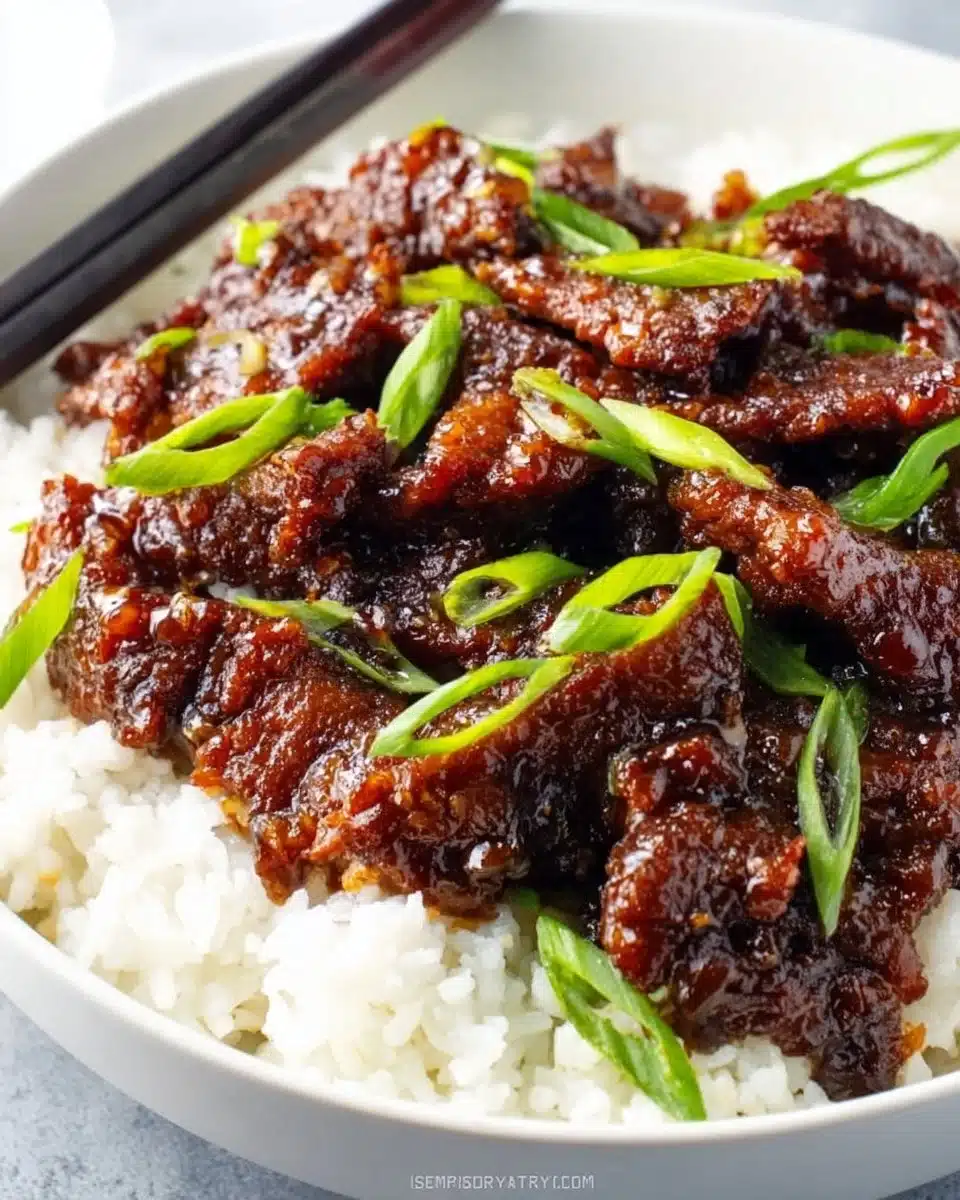
Gluten Free Mongolian Beef — 30-Minute Weeknight Dinner
Bright, glossy sauce clings to thin slices of tender beef and scallions for a fast, sweet-savory dinner — Gluten Free Mongolian Beef arrives at the table in under 30 minutes. I developed this gluten-free take after testing it eight times to nail the texture of the sauce without wheat-based soy sauce. This version uses tamari and a simple cornstarch slurry to make the sauce shine while keeping it gluten free and family-friendly. It’s a fast weeknight recipe I first refined in a busy restaurant kitchen and adapted for home cooks with no special ingredients. If you prefer richer braises, try a classic beef bourguignon for a different kind of slow-cooked comfort. Read on for exact measurements, timing, and pro tips so your stir-fry turns out perfect every time.
Why This Recipe Works
- High heat and very thin slices of beef create fast browning without overcooking the interior.
- A cornstarch slurry both thickens the sauce and creates that glossy sheen that clings to meat.
- Tamari replaces regular soy sauce to keep the dish gluten free while maintaining umami.
- Quick deglazing of the pan pulls up fond (browned bits) for deeper, more complex flavor.
- Resting the cooked meat briefly off heat prevents the sauce from becoming gummy.
Ingredients Breakdown
- Beef (450 g / 1 lb flank steak or sirloin): Slice thin across the grain for tenderness. Flank is economical; sirloin is a touch more tender.
- Tamari (120 ml / 1/2 cup): Gluten-free soy sauce substitute. Do not use regular soy sauce if you need gluten free.
- Brown sugar (50 g / 1/4 cup packed): Balances tamari with caramel notes. You can use coconut sugar, but the flavor will be less sticky.
- Cornstarch (15 g / 1 tablespoon + extra): For dredging and a final slurry; creates glossy sauce. Arrowroot works 1:1, but the sauce may be slightly more translucent.
- Neutral oil (30 ml / 2 tablespoons): For searing at high heat — avocado or grapeseed work well.
- Garlic (9 g / 3 cloves, minced) and ginger (10 g / 1 tablespoon, minced): Primary aromatics. Fresh is best.
- Scallions (60 g / 4 large, cut into 2-inch/5 cm pieces): Adds fresh bite and color. Stir in right at the end for texture.
- Toasted sesame oil (5 ml / 1 teaspoon): Finishing oil for aroma.
- Rice vinegar (15 ml / 1 tablespoon): Brightens the sauce.
- Red pepper flakes (optional, 1/4 teaspoon): For a touch of heat.
- Salt (to taste): Minimal; tamari provides much of the saltiness.
- Optional garnish: Sesame seeds (5 g / 1 teaspoon) and extra scallions.
Substitution note: If you use a 1:1 gluten-free soy blend that contains miso or other ingredients, flavor may shift. If using Morton kosher salt instead of Diamond Crystal, use about half the volume because Morton is denser.
Essential Equipment
- Large nonstick skillet or carbon steel wok (12-inch / 30 cm): A wok gives the best high-heat sear; a large skillet works for most home stoves. See our Chinese beef and broccoli noodles guide if you plan to stretch this sauce to noodles.
- Sharp chef’s knife and cutting board: For very thin slices, partially freeze the beef for 20 minutes to firm it up.
- Small bowl and whisk: For mixing sauce and slurry.
- Tongs or a flat turner: For quick flipping.
- Instant-read thermometer (optional): Useful to check doneness — beef slices should be 52–57°C (125–135°F) for medium-rare to medium.
If you don’t have a wok, use the largest skillet you own and make sure the pan gets very hot before adding meat.
Prep time 10 minutes; Cook time 15 minutes; Inactive time None — Total about 25 minutes. Makes 4 servings (about 1 cup / 240 g per serving).
Step 1: Slice and Dredge the Beef
Slice 450 g (1 lb) flank steak thinly against the grain into 3 mm–5 mm (1/8–1/4 inch) pieces. Toss the beef with 15 g (1 tbsp) cornstarch and a pinch of salt until evenly coated; let rest 2 minutes. This thin coating helps create a light crust when searing.
Step 2: Make the Sauce
Whisk together 120 ml (1/2 cup) tamari, 50 g (1/4 cup) packed brown sugar, 15 ml (1 tbsp) rice vinegar, minced garlic (9 g / 3 cloves), and minced ginger (10 g / 1 tbsp) in a small bowl. Reserve 30 ml (2 tbsp) of the mix and whisk in 15 g (1 tbsp) cornstarch to form a slurry. This slurry will thicken the sauce quickly without lumps.
Step 3: Sear the Beef
Heat 30 ml (2 tbsp) neutral oil over high heat in the wok or skillet until shimmering, about 1–2 minutes. Sear the beef in a single layer for 30–45 seconds per side until browned but not fully cooked; work in batches to avoid crowding. Transfer seared strips to a plate; they will finish cooking in the sauce.
Step 4: Build the Sauce in the Pan
Lower heat to medium-high. Add a drizzle of oil if the pan is dry and toss in the reserved garlic and ginger; cook 20–30 seconds until fragrant. Pour in the reserved tamari mixture and scrape up browned bits, simmer for 30 seconds. Do not let the garlic burn.
Step 5: Finish and Glaze
Return the beef and any accumulated juices to the pan, stir to coat, then pour in the cornstarch slurry. Cook, stirring constantly, until the sauce thickens and becomes glossy, about 60–90 seconds. Add scallions and cook 20–30 seconds until just wilted. Finish with 5 ml (1 tsp) toasted sesame oil and a pinch of red pepper flakes if using.
Step 6: Rest and Serve
Remove from heat and let rest 1 minute — this helps the sauce settle and makes the meat juicier. Serve immediately over steamed rice, cauliflower rice, or noodles.
Expert Tips & Pro Techniques
- Slice cold: Partially freezing the steak for 15–20 minutes firms it and makes much thinner, cleaner slices possible.
- High heat, quick cook: Sear on high heat for only 30–45 seconds per side to get caramelization without toughening the meat.
- Common mistake — overcrowding: Crowding the pan drops the temperature and causes steaming instead of searing. Cook in batches.
- Slurry timing: Always add the cornstarch slurry at the end and stir constantly; adding cornstarch too early can make the sauce pasty.
- Make-ahead: Mix the sauce (without slurry) and store in the fridge up to 24 hours. Slice the beef and keep it covered for up to 6 hours. Cook from cold; total time remains under 30 minutes.
- Professional trick adapted for home cooks: After searing, briefly deglaze with a tablespoon of water or broth and reduce for 10 seconds to lift fond; this adds depth without extra steps.
- Texture tip: For a lighter finish, toss in half the scallions during cooking and reserve the other half raw as a crisp garnish.
Storage & Reheating
- Refrigerator: Store leftovers in an airtight container for 3–4 days. Keep the sauce and rice together or separate to preserve texture.
- Freezer: This dish freezes acceptably for up to 2 months. Cool completely, portion into freezer-safe containers, and freeze. Thaw overnight in the fridge before reheating.
- Reheating: Reheat gently in a skillet over medium heat with a splash of water or broth, stirring until warmed through (about 3–5 minutes). Avoid microwaving when possible because the texture of the sauce can degrade and the meat can turn chewy.
Variations & Substitutions
- 30-Minute Mongolian Beef (faster prep): Use pre-sliced beef from the butcher and pre-minced garlic to cut prep to 5 minutes; cook time remains the same. This is a classic "30-minute Mongolian beef" shortcut without flavor loss.
- Paleo-friendly: Use coconut aminos (120 ml / 1/2 cup) in place of tamari and arrowroot starch (15 g / 1 tbsp) instead of cornstarch. The sauce will be slightly sweeter and less glossy.
- Vegetarian version: Replace beef with 450 g (1 lb) extra-firm tofu, pressed and cut into 2 cm (3/4 inch) slabs. Dust with 15 g (1 tbsp) cornstarch and pan-sear until golden, then follow the same sauce steps. Reduce cooking time to 6–8 minutes.
- Spicy: Add 5–10 g (1–2 tsp) sambal oelek to the sauce for a chili-forward profile; keep rest of the recipe identical.
- Pasta twist: Toss the finished beef and sauce with cooked spaghetti or udon (450 g cooked) for an umami pasta; see our creamy tomato beef pasta for ideas on pairing beef with noodles.
Serving Suggestions & Pairings
- Steamed jasmine rice or cauliflower rice for a low-carb option.
- A crisp cucumber salad with rice vinegar and sesame oil to cut the richness.
- Garlic-sesame green beans or bok choy quickly sautéed for a bright vegetable side.
- For other beef dinner ideas, compare textures with our Cranberry Roast Beef for holiday-style plating.
- Beverage pairing: A light lager or an off-dry Riesling complements the sweet-salty sauce.
Nutrition Information
Per serving (1 cup / ~240 g). Recipe yields 4 servings.
- Calories: 420 kcal
- Total Fat: 20 g
- Saturated Fat: 5 g
- Cholesterol: 95 mg
- Sodium: 880 mg
- Total Carbohydrates: 28 g
- Dietary Fiber: 1 g
- Sugars: 18 g
- Protein: 33 g
Nutrition values are estimates. Actual values may vary based on specific ingredients and preparation methods.
Frequently Asked Questions
Q: Why did my Mongolian beef turn out dry?
A: Dry beef usually means it was overcooked or cut with the grain. Slice against the grain thinly and sear only 30–45 seconds per side. Let the meat rest off heat 1 minute before serving.
Q: Can I make this without cornstarch?
A: Yes — use arrowroot starch 1:1 for the cornstarch, or reduce the sauce slightly by simmering longer. Without any starch the sauce will be thinner and less glossy.
Q: Can I double this recipe?
A: Yes, you can double ingredients, but cook the beef in batches so the pan stays hot. Overcrowding will steam the meat and ruin the sear.
Q: Can I prepare this the night before?
A: You can prep the beef slices and sauce (without slurry) the night before. Store them separately in the fridge and cook within 24 hours for best texture.
Q: How long does this keep in the fridge?
A: Stored in an airtight container, it keeps 3–4 days. Reheat in a skillet with a splash of water to restore sauciness.
Q: Is this recipe truly gluten free?
A: Yes, if you use certified gluten-free tamari and check labels on any packaged ingredients like sesame oil. Regular soy sauce contains wheat and must be avoided.
Q: What’s the best rice to serve with this?
A: Steamed jasmine rice has a fragrant, slightly sticky texture that pairs beautifully. For lower carbs, serve over cauliflower rice or a bed of stir-fried vegetables.
Conclusion
If you want another quick version for comparison, try the 30-Minute Mongolian Beef – Taste And See recipe to see a slightly different balance of sugar and soy. For extra guidance on gluten-free swaps and thickeners, check this Gluten Free Mongolian Beef – Eat With Clarity guide. Enjoy this fast, glossy stir-fry on busy nights — it’s a dependable weeknight winner.
Print
Gluten Free Mongolian Beef
- Total Time: 25 minutes
- Yield: 4 servings 1x
- Diet: Gluten-Free
Description
A fast, sweet-savory dinner featuring tender beef and a glossy tamari sauce, ready in under 30 minutes.
Ingredients
- 450 g flank steak or sirloin, sliced thin
- 120 ml tamari (gluten-free soy sauce)
- 50 g brown sugar
- 15 g cornstarch (1 tablespoon) + extra for dredging
- 30 ml neutral oil (2 tablespoons)
- 9 g garlic (3 cloves, minced)
- 10 g ginger (1 tablespoon, minced)
- 60 g scallions (4 large, cut into 2-inch pieces)
- 5 ml toasted sesame oil (1 teaspoon)
- 15 ml rice vinegar (1 tablespoon)
- Red pepper flakes (optional, to taste)
- Salt (to taste)
- Optional garnish: 5 g sesame seeds (1 teaspoon)
Instructions
- Slice the flank steak thinly against the grain into 3 mm–5 mm pieces. Toss with cornstarch and a pinch of salt, let rest 2 minutes.
- Whisk together tamari, brown sugar, rice vinegar, minced garlic, and minced ginger in a small bowl. Reserve some of the mix and whisk in cornstarch to form a slurry.
- Heat oil in a wok or skillet until shimmering. Sear beef in a single layer for 30–45 seconds per side until browned. Transfer to a plate.
- Lower the heat to medium-high, add garlic and ginger to the pan, cooking until fragrant. Pour in the reserved sauce mixture and scrape up browned bits.
- Return the beef to the pan, add cornstarch slurry, and cook until the sauce thickens and becomes glossy. Stir in scallions and cook until just wilted.
- Remove from heat and let rest for 1 minute before serving over rice or noodles.
Notes
For a gluten-free version, ensure tamari is certified gluten-free. Pre-sliced beef can cut prep time significantly.
- Prep Time: 10 minutes
- Cook Time: 15 minutes
- Category: Main Course
- Method: Stir Fry
- Cuisine: Asian
Nutrition
- Serving Size: 1 serving
- Calories: 420
- Sugar: 18g
- Sodium: 880mg
- Fat: 20g
- Saturated Fat: 5g
- Unsaturated Fat: 15g
- Trans Fat: 0g
- Carbohydrates: 28g
- Fiber: 1g
- Protein: 33g
- Cholesterol: 95mg