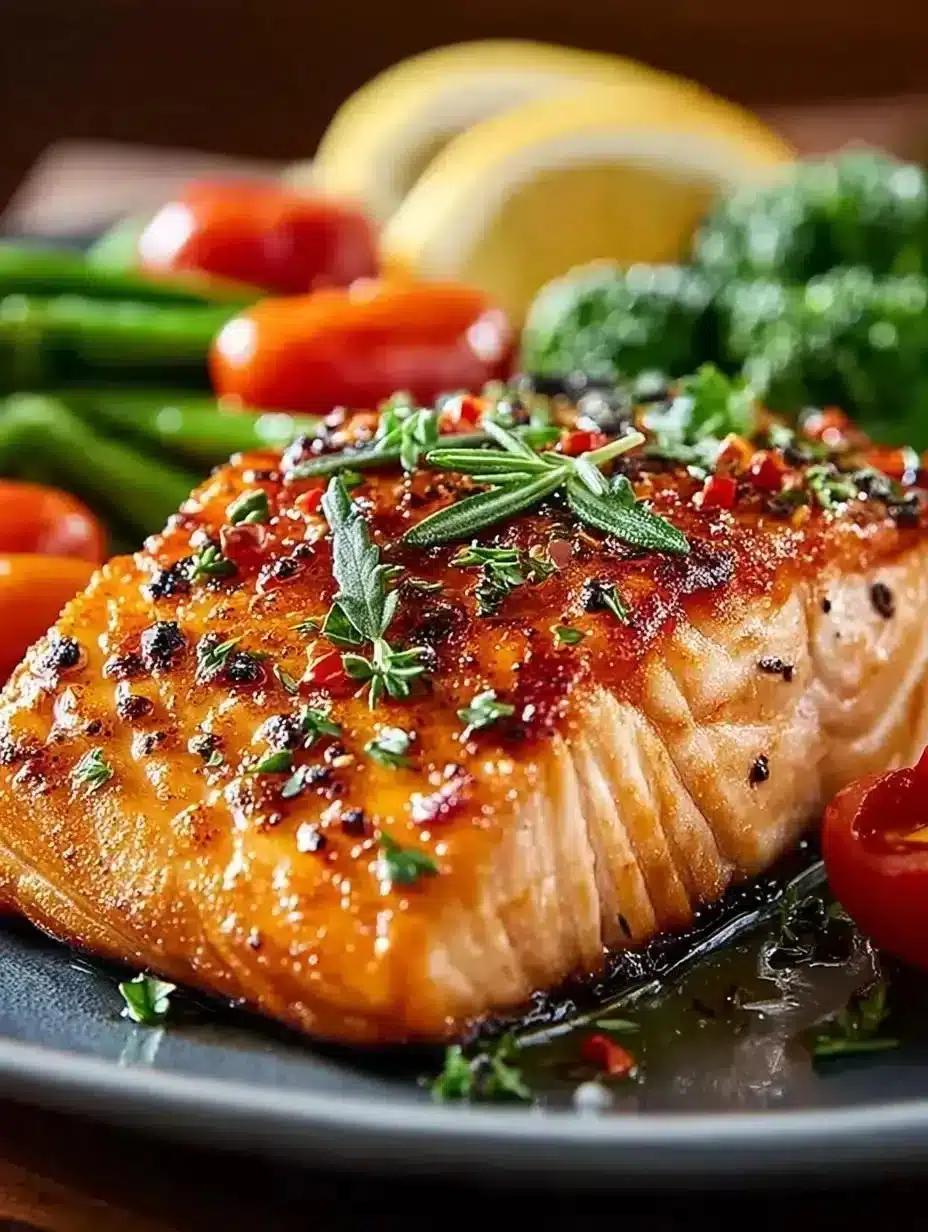
Texas Roadhouse Salmon Copycat Recipe
The first bite is bright with lemon and warm with herb butter, and the crust snaps against a flaky center — this Texas Roadhouse Salmon copycat hits those exact notes. After testing this at home eight times and refining the herb mix and pan technique, I settled on a fast, repeatable method that gives a steakhouse-quality crust without deep frying. I developed these steps while adapting restaurant plating for busy home kitchens, so you get consistent results in under 30 minutes. Read on for a clear ingredient breakdown, step-by-step instructions, and pro tips that stop common mistakes before they start.
Why This Recipe Works
- A quick sear in a hot pan creates Maillard browning for a flavorful crust without overcooking the salmon.
- A thin coating of mustard and panko holds the herb crust while letting the fish’s texture remain tender.
- Blending fresh herbs with a bit of butter melts into the fish during finish-searing, boosting aroma and mouthfeel.
- Brining briefly (a light salt soak) firms the flesh and seasons evenly without drying.
- Finishing the fish in a hot oven ensures an even internal temperature and a controlled doneness.
See an alternate Texas Roadhouse Salmon version here for inspiration.
Ingredients Breakdown
- Salmon fillets: 680 g (24 oz) total, about 170 g (6 oz) per serving. Use center-cut fillets, skin-on or skinless; skin-on helps protect the flesh and crisps well.
- Fine sea salt: 1½ tsp (8 g). Use Diamond Crystal kosher salt for a lighter measure; if using Morton’s, halve the amount (density differs).
- Freshly ground black pepper: ½ tsp (1 g). Adds bright heat; grind fresh for best flavor.
- Dijon mustard: 2 tbsp (30 g). Acts as a sticky binder and adds gentle tang. You can substitute whole-grain mustard for texture.
- Panko breadcrumbs: 60 g (2 oz / ¾ cup). Provides a light, crunchy crust; fine bread crumbs will make a denser coating.
- Fresh parsley: 15 g (½ oz / ¼ cup packed), finely chopped. Bright herb flavor.
- Fresh chives: 10 g (¼ cup), chopped. Oniony lift without bite.
- Fresh dill: 10 g (¼ cup), chopped. Optional but very Texas-Roadhouse-like; leave out for a milder herb profile.
- Unsalted butter: 30 g (2 tbsp) softened. Enriches the crust and helps brown the herbs.
- Lemon: 1 medium (zest and 1 tbsp juice). Adds acidity to brighten the fish.
- Olive oil: 15 ml (1 tbsp) for pan-searing. Use neutral vegetable oil for higher smoke point if preferred.
- Optional: ½ tsp (2 g) smoked paprika for a faint smokiness.
Substitutions and impact warnings:
- Gluten-free: Replace panko with 60 g (¾ cup) certified GF panko — crust texture slightly different.
- Dairy-free: Use 30 g (2 tbsp) olive oil or a vegan butter substitute in place of butter; flavor is a bit less rich.
- No mustard: Use beaten egg white as binder; mustard adds tang and helps with browning.
Essential Equipment
- Large ovenproof skillet (10–12 inch / 25–30 cm) — cast iron works best for heat retention and crisping.
- Instant-read thermometer — critical to hit the right doneness without overcooking.
- Small bowl for herb-butter mix and a shallow dish for crumbs.
- Fish spatula or wide, thin turner to flip fillets without breaking them.
- If you don’t have an ovenproof skillet, use a heavy nonstick pan for searing and transfer fish to a baking sheet lined with foil to finish in the oven.
Step-by-Step Instructions
This recipe makes 4 servings. Prep Time 10 minutes; Cook Time 12–15 minutes; Total Time 22–25 minutes; Inactive Time: None.
Step 1: Lightly brine and season the salmon
Pat 680 g (24 oz) salmon dry and sprinkle evenly with 1½ tsp (8 g) fine sea salt and ½ tsp (1 g) black pepper. Let sit for 5 minutes to season the flesh and draw out excess surface moisture. This quick brine firms the fish and helps the crust stick.
Step 2: Make the herb butter and crumb mix
In a small bowl, combine 30 g (2 tbsp) softened unsalted butter, 15 g (½ oz) chopped parsley, 10 g (¼ cup) chopped chives, 10 g (¼ cup) chopped dill (optional), zest of 1 lemon, and ½ tsp smoked paprika if using. In a shallow dish, stir 60 g (2 oz / ¾ cup) panko breadcrumbs with a pinch of salt. The butter blend flavors the crumbs and melts into the salmon while searing.
Step 3: Apply mustard and press on the crumb mix
Brush each fillet with 2 tbsp (30 g) Dijon mustard, covering the top surface only. Press the panko-herb mixture gently onto the mustard layer so it adheres. Do not pack the crumbs thickly — a thin, even layer crisps best.
Step 4: Sear the salmon, crust-side down
Heat 15 ml (1 tbsp) olive oil in a 10–12 inch (25–30 cm) ovenproof skillet over medium-high until shimmering (about 190°C/375°F surface temperature). Place fillets crust-side down and sear for 2–3 minutes, pressing lightly to ensure contact, until the crust is golden brown and fragrant. Check frequently to avoid burning the breadcrumbs.
Step 5: Finish in the oven to doneness
Transfer the skillet to a preheated oven at 200°C (400°F) and roast for 6–8 minutes, until the thickest part reaches 52–54°C (125–130°F) for medium-rare to medium, or 60–63°C (140–145°F) for medium-well. Use an instant-read thermometer. Remove at 52–54°C (125–130°F) for a moist, flaky center.
Step 6: Rest and finish with lemon-butter
Remove the skillet from the oven and spoon any melted butter or pan juices over the fillets. Let rest 2 minutes; the carryover heat raises the internal temp slightly. Squeeze 1 tbsp (15 ml) fresh lemon juice over the fish just before serving for brightness.
Expert Tips & Pro Techniques
- Common mistake: Overcrowding the pan cools the surface and prevent browning. Cook in batches if needed and keep finished pieces loosely tented in foil.
- Use an instant-read thermometer to avoid guesswork. Fish can go from perfect to dry within a minute.
- Make-ahead: Mix the herb butter and keep it refrigerated up to 48 hours. Pat fillets dry and keep them chilled; assemble crumb coating just before cooking to avoid sogginess.
- Professional trick: Start crust-side down to form a barrier; flipping too early can pull the crust off. Wait until the crust releases easily from the pan.
- Home-friendly swap: If you don’t have panko, blitz stale sandwich bread into coarse crumbs; toast lightly in a dry pan first for better crunch.
- For even heating, let cold fillets sit at room temperature 15 minutes before cooking.
Storage & Reheating
- Refrigerator: Store cooled salmon in an airtight container for up to 3 days. Keep the crust on top to minimize sogginess.
- Freezer: Not ideal for best texture; you can freeze cooked fillets wrapped tightly for up to 1 month. Thaw in the fridge overnight.
- Reheating: Reheat in a 175°C (350°F) oven for 8–10 minutes until warmed through. Avoid microwaving — it makes the crust soggy.
Variations & Substitutions
- Gluten-Free Version: Replace 60 g (¾ cup) panko with certified GF panko 1:1. No other changes; texture is slightly less airy.
- Spicy Cajun Twist: Add 1 tsp Cajun seasoning to the mustard layer and swap parsley for cilantro. Keep roast time the same.
- Herb-Free Simple Crust: Use 60 g (¾ cup) plain panko mixed with 30 g (2 tbsp) grated Parmesan; omit fresh herbs and dill. Parmesan will brown faster—watch crust closely.
- Broiled Finish: If you prefer, after searing, transfer fillets under a high broiler 5–7 cm (2–3 in) from heat for 1–2 minutes to finish the crust — watch carefully to avoid burning.
- Low-Sodium: Reduce initial salt to ¾ tsp (4 g) and rely on lemon and herbs for flavor. Taste the herb butter before adding salt.
Serving Suggestions & Pairings
- Serve with garlic mashed potatoes and steamed green beans for a classic steakhouse plate. Try our chicken pesto flatbread if you want a shareable starter.
- A crisp salad with citrus segments and toasted almonds balances the richness; pair with a chilled Sauvignon Blanc.
- For a casual dinner, plate the salmon over a bed of herbed couscous and grab a fruity iced drink like this cherry vanilla iced latte for a playful pairing.
- Finish the meal with a simple dessert, such as a light mousse or a rich bar; I like a chocolate peanut butter dessert to contrast the bright fish.
Nutrition Information (per serving)
Serving size: 1 fillet (approx. 170 g / 6 oz). Recipe yields 4 servings.
- Calories: 460 kcal
- Total Fat: 29 g
- Saturated Fat: 9 g
- Cholesterol: 110 mg
- Sodium: 420 mg
- Total Carbohydrates: 6 g
- Dietary Fiber: 1 g
- Sugars: 1 g
- Protein: 37 g
Nutrition values are estimates. Actual values may vary based on specific ingredients and preparation methods.
Frequently Asked Questions
Q: Why did my salmon come out dry?
A: Most likely it was overcooked. Fish cooks quickly; use an instant-read thermometer and remove the fillet at 52–54°C (125–130°F) for moist, flaky salmon. Also, avoid very high oven times after searing.
Q: Can I make this without eggs?
A: Yes. This recipe uses Dijon mustard as the binder, not eggs. If you prefer no mustard, a light brushing of olive oil or a thin egg white will help crumbs adhere, but egg white changes texture slightly.
Q: Can I double this recipe for a crowd?
A: Yes, double the ingredients and cook in batches to avoid overcrowding the pan. If you have multiple skillets, stagger cooking so each fillet gets direct, hot contact for a crisp crust.
Q: Can I prepare this the night before?
A: You can mix the herb butter and measure the dry ingredients up to 48 hours ahead. Do not assemble the crumb coating on the fillets until just before cooking to prevent sogginess.
Q: How long does this keep in the fridge?
A: Stored in an airtight container, cooked salmon keeps well for up to 3 days. Reheat gently in a 175°C (350°F) oven to preserve texture.
Q: Is skin-on better than skinless?
A: Skin-on protects the flesh and crisps nicely when seared skin-side down first. For this crusted method, skin-on is preferred, but both work.
Q: Will this work on thinner fillets?
A: Yes, reduce oven finish time by 2–4 minutes and monitor internal temperature closely to avoid overcooking.
Conclusion
This copycat Texas Roadhouse Salmon gives you a crisp, herb-forward crust and a tender, flaky interior in under 30 minutes. For another take on this restaurant-style main, check out the Texas Roadhouse Salmon – The Food Hussy version for different crust ideas. If you’re also planning a full steakhouse-style meal, the Texas Roadhouse Herb Crusted Chicken Copycat Recipe offers a shareable, herb-crusted entrée to pair alongside your salmon.
Print
Texas Roadhouse Salmon Copycat Recipe
- Total Time: 25 minutes
- Yield: 4 servings 1x
- Diet: Gluten-Free, Dairy-Free (optional)
Description
Enjoy a delicious steakhouse-style salmon with a crispy herb crust and tender interior, ready in under 30 minutes.
Ingredients
- 680 g salmon fillets (24 oz), skin-on or skinless
- 1½ tsp fine sea salt (8 g)
- ½ tsp freshly ground black pepper (1 g)
- 2 tbsp Dijon mustard (30 g)
- 60 g panko breadcrumbs (2 oz / ¾ cup)
- 15 g fresh parsley, finely chopped (½ oz / ¼ cup packed)
- 10 g fresh chives, chopped (¼ cup)
- 10 g fresh dill, chopped (¼ cup, optional)
- 30 g unsalted butter, softened (2 tbsp)
- 1 medium lemon (zest and 1 tbsp juice)
- 15 ml olive oil (1 tbsp)
- ½ tsp smoked paprika (2 g, optional)
Instructions
- Pat the salmon dry and sprinkle evenly with salt and pepper. Let sit for 5 minutes.
- Combine butter, parsley, chives, dill, lemon zest, and smoked paprika in a small bowl.
- Brush each fillet with Dijon mustard and press on the panko-herb mixture.
- Heat olive oil in an ovenproof skillet over medium-high heat. Sear fillets crust-side down for 2–3 minutes until golden.
- Transfer the skillet to a preheated oven at 200°C (400°F) and roast for 6–8 minutes until the internal temperature reaches 52–54°C (125–130°F).
- Spoon melted butter over the fillets and let rest for 2 minutes. Squeeze lemon juice over the fish before serving.
Notes
Use an instant-read thermometer for accurate doneness. Avoid overcrowding the pan to prevent steaming.
- Prep Time: 10 minutes
- Cook Time: 15 minutes
- Category: Main Course
- Method: Searing and Baking
- Cuisine: American
Nutrition
- Serving Size: 1 fillet (approx. 170 g / 6 oz)
- Calories: 460
- Sugar: 1 g
- Sodium: 420 mg
- Fat: 29 g
- Saturated Fat: 9 g
- Unsaturated Fat: 15 g
- Trans Fat: 0 g
- Carbohydrates: 6 g
- Fiber: 1 g
- Protein: 37 g
- Cholesterol: 110 mg